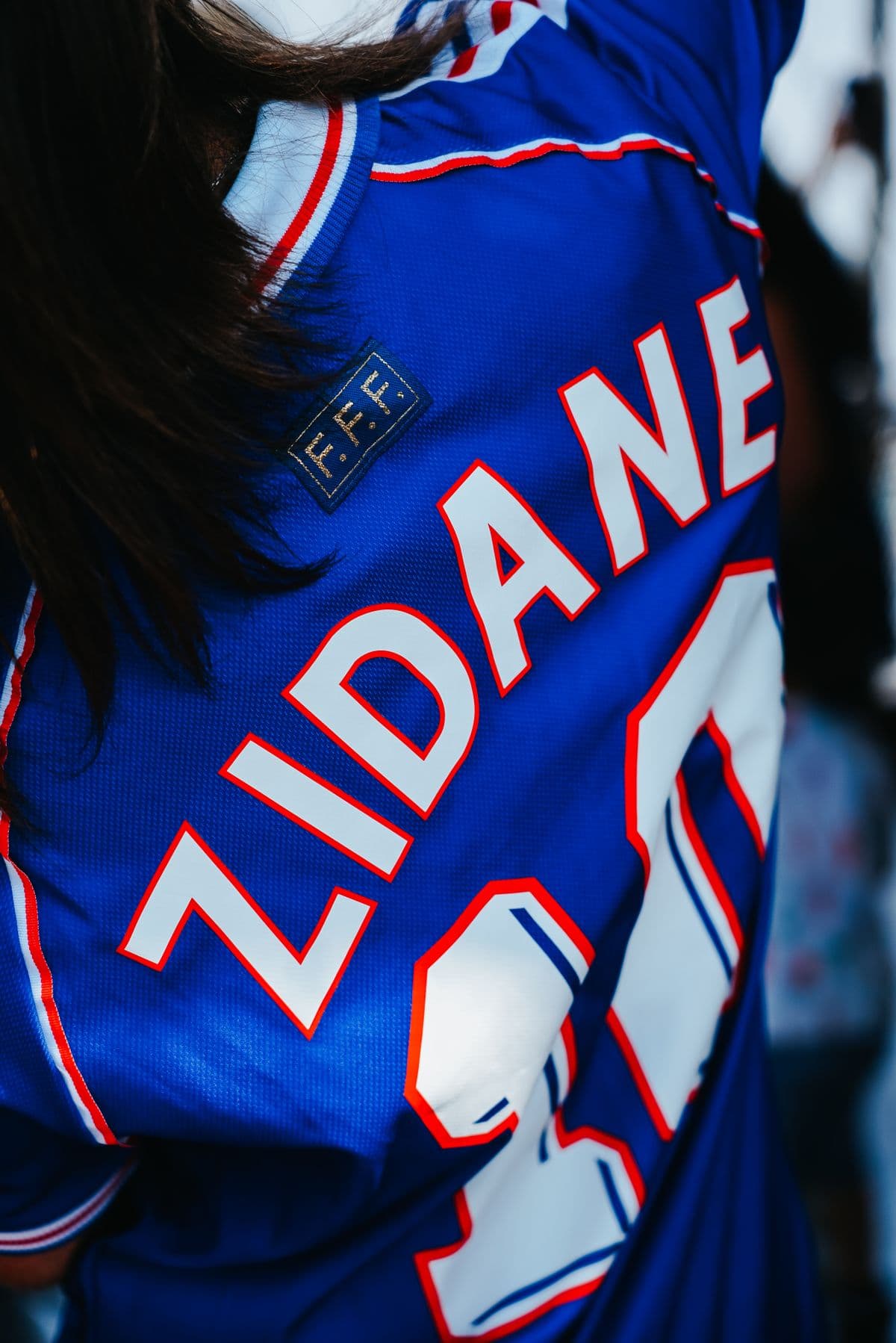
Authentic vs Replica Football Jerseys: How to Spot the Difference
A jersey-shop guide to authentic vs replica football jerseys: fabric, badges, stitching, tags and price — how to spot the real deal and avoid fakes.
May 28, 2026 · 5 min read · sidejersey
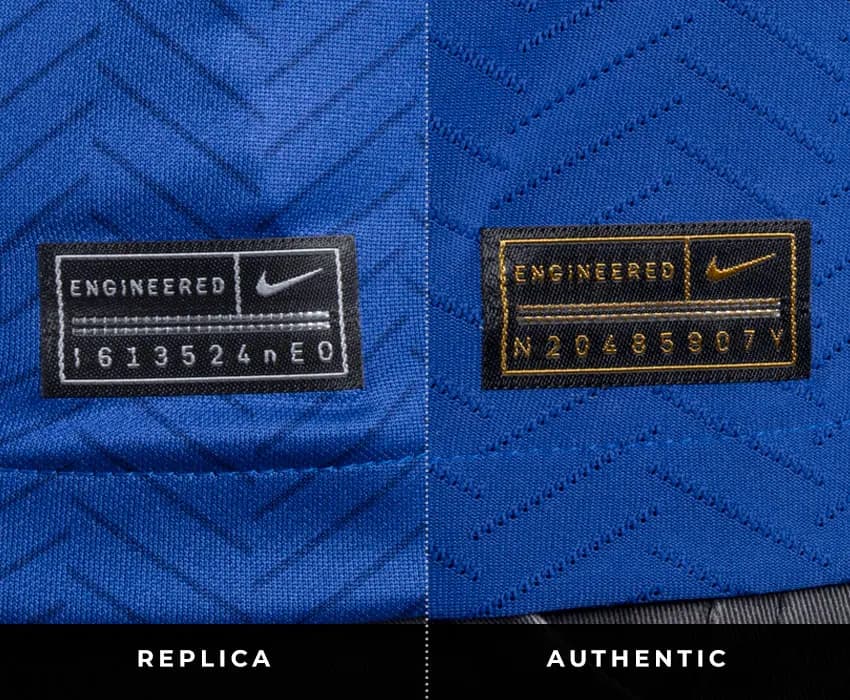
Working out the difference between authentic vs replica football jerseys is the single best way to stop wasting money on shirts that won't survive a season. This guide walks you through fabric, badges, stitching, tags and price — the five things that actually separate the real thing from a high-street lookalike (or worse, a counterfeit).
What "authentic" and "replica" really mean
Adidas, Nike and Puma all run a two-tier (sometimes three-tier) jersey programme for national teams and clubs. The authentic shirt — sometimes called "match" or "player issue" — is the exact kit footballers wear on the pitch. It uses the brand's top-of-the-line performance fabric (Adidas Heat.RDY, Nike Dri-FIT ADV/Vapor, Puma Ultraweave), a tighter athletic cut and bonded seams. The replica — also called "fan" or "stadium" — is the supporter version: same colourway, same crest, same sponsor, but built on a heavier 100% polyester body with a roomier fit and standard stitched details. Both are official, both are licensed, both ship with the same hologram and tags. The difference is in how the shirt is made, not whether it's real. You'll see the authentic versions across our World Cup 2026 jerseys hub alongside the fan editions.The fabric test: feel before you buy
Pick up two shirts side by side and the difference is obvious in your hands. Authentic kits feel almost paper-thin, with a slightly rough engineered weave that channels sweat sideways across the body. Replica kits feel smoother, heavier and more like a sports T-shirt — that's the recycled polyester doing its job for everyday wear. Neither is "better" in absolute terms. Authentic is built for 90 minutes of high-intensity football. Replica is built to be worn down the pub, to matches in the stands, and through a few hundred washes. If you're choosing between the two for a shirt you'll wear casually — to a barbecue, to watch a game, on holiday — the replica is the more sensible buy. You can browse the casual-cut options across our national teams and club teams collections.The crest, sponsor and number finishing
This is where most counterfeits fall apart. On a genuine authentic shirt the federation crest is usually a heat-pressed silicone "puff" badge — slightly raised, sharp around the edges, no loose threads. On a replica the crest is typically embroidered (you can feel the stitching on the inside) or a flatter heat transfer. Look closely at sponsor logos, manufacturer logos (the three stripes, the Swoosh) and squad numbers. Authentic numbers are bonded directly onto the fabric with no visible stitch holes. Replica numbers are flock-printed or thinner heat-press. The font should be crisp and exactly match the kit supplier's typeface for that season — if the curve on the "6" looks slightly wrong, you're probably holding a fake. Our Europe and South America sections only carry shirts where the badge work checks out.Seams, hems and the inside of the shirt
Turn the jersey inside out. This is the easiest way to spot a counterfeit. Real authentic shirts use bonded or laser-cut seams — there's almost no stitching visible, just a thin line of heat-fused fabric. Real replicas use clean, even double-stitching with no loose threads, an overlocked hem at the bottom and a soft printed care label rather than a scratchy sewn-in tag. Fakes always cut corners on the inside. You'll see uneven stitch density, loose threads at the armpit, a printed care label with typos ("100% Polyster" is a classic), and a sewn-in country-of-origin tag that says somewhere unrelated to the manufacturer's actual supply chain. If the inside looks rushed, the outside is lying to you.Tags, holograms and serial numbers
Every official Adidas and Nike shirt ships with a manufacturer hologram or a foil-stamped authenticity sticker. Adidas authentics carry a small dotted serial number; Nike Vapor/Match jerseys have a distinctive cardboard tag with a Vapor watermark and a unique product code. Replicas come with a slightly different tag set but they still carry the manufacturer hologram and the licensee mark. If a "World Cup 2026" shirt arrives with no hologram, no FIFA licensee mark, or a tag that's been clearly glued back on, it's a fake. Real licensees are listed at FIFA's official World Cup 2026 site, and the supplier marks should match.The price test
Use price as a sanity check. As a rough guide for the 2026 cycle: authentic national-team shirts retail at roughly £100–£130, replicas at £70–£90, and kids' replicas at £45–£60. If you see a "brand new 2026 authentic" for £35 with free shipping from an unfamiliar marketplace seller, it isn't authentic. Counterfeiters can copy a logo but they can't copy the unit economics of licensed manufacturing. That said, last-season clearance is real. We regularly mark down legitimate kits across Premier League, La Liga and MLS ranges when a new home shirt drops — that's how genuine bargains happen, not via a random Instagram ad.When to pick replica
For most fans, the replica is the smarter buy. It's cheaper, more durable in domestic washing machines, more forgiving on fit, and it looks identical from a metre away. If you're buying an England or Argentina jersey for match-day pints, the replica is exactly what you want. Replicas are also the right pick for kids who'll grow out of a kit in a year, and for collectors organising a rotation across Brazil, France, Germany, Spain, Portugal and Italy. You get six shirts for the price of four authentics.When to pick authentic
Authentic is worth the premium if you actually play in the shirt, if you collect match-spec kits as memorabilia, or if you simply want the closest thing to what the players are wearing in Canada, Mexico and the USA next summer. The fit is athletic, the fabric is genuinely cooler in hot weather, and the badge work is the version the players themselves get. It's also a good shout for warm-climate kits — a Mexico jersey or Belgium jersey in the engineered authentic fabric handles a humid afternoon noticeably better than the heavier replica polyester.How we check every shirt we list
Every jersey on SideJersey is sourced through licensed channels and inspected for hologram, tag set, stitching and badge work before it's listed. We won't carry anything we wouldn't wear ourselves. If you're new to buying online and want to understand how we vet stock, our about us page covers the supply side, and our FAQ answers the most common sizing and authenticity questions. If you love the look of older kits, our classic jerseys range is curated the same way — vintage shirts get the same authenticity check as the current-season ones.Ready to shop with confidence?
Now that you can tell the difference between authentic vs replica football jerseys, you can shop without second-guessing. Head over to our World Cup 2026 jerseys collection to see both tiers side by side, pick the one that suits how you'll wear it, and ignore any deal that looks too good to be true. Your shirt should last as long as the memories it's tied to.Explore the latest releases at SideJersey.