World Cup 2026 Group Stage Guide: All 12 Groups, All 48 Teams
Your complete World Cup 2026 group stage guide: all 12 groups, all 48 teams, group of death picks, key fixtures and where to buy every kit.
May 31, 2026 · 5 min read · sidejersey
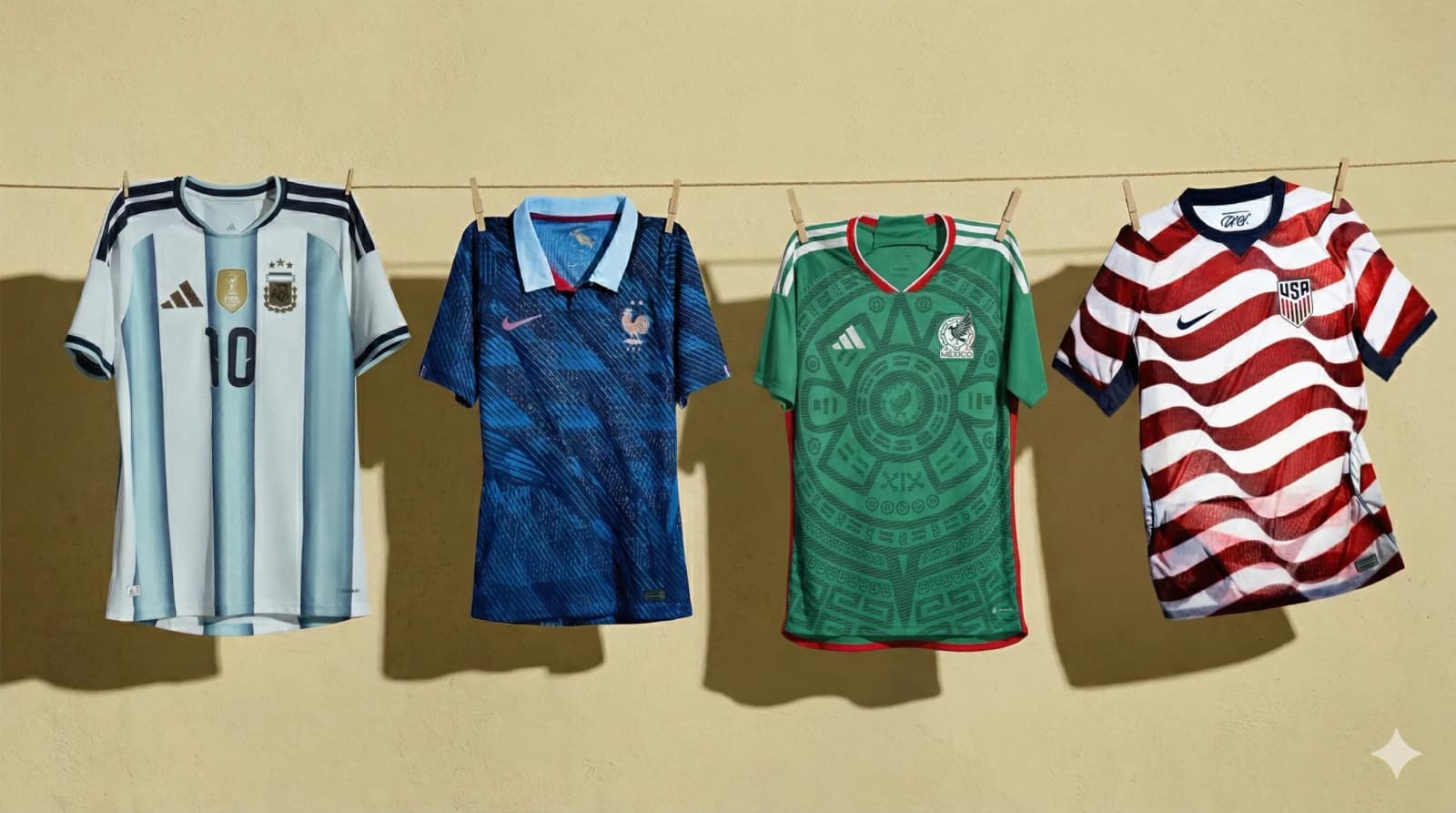
The World Cup 2026 group stage guide you need is finally here, with all 12 groups and all 48 teams confirmed after the Final Draw in Washington, D.C. on 5 December 2025. This is the first time the tournament has expanded beyond 32 teams, and the new format makes the group stage longer, busier and packed with first-time qualifiers worth watching.
How the World Cup 2026 group stage works
The 48 teams are split into 12 groups of four. Each side plays three matches in their group, and the top two from every group go through to the round of 32. The eight best third-placed teams across the tournament also advance, taking the knockout total to 32 sides. It is a bigger, busier draw than the old 32-team setup, but it gives smaller football nations a real shot at making history.
Matches run from 11 June 2026 to 19 July 2026 across 16 host cities in the United States, Mexico and Canada. With 104 matches in total, this is comfortably the biggest World Cup ever organised. If you have not picked a kit yet, the World Cup 2026 jerseys hub has every confirmed home and away shirt listed so far.
All 12 groups, all 48 teams
Here is the full breakdown from the Final Draw at the Kennedy Center:
- Group A: Mexico, South Africa, South Korea, Czech Republic
- Group B: Canada, Switzerland, Qatar, Bosnia and Herzegovina
- Group C: Brazil, Morocco, Scotland, Haiti
- Group D: USA, Paraguay, Australia, Turkey
- Group E: Germany, Curaçao, Costa Rica, Ecuador
- Group F: Netherlands, Japan, Tunisia, Sweden
- Group G: Belgium, Egypt, Iran, New Zealand
- Group H: Spain, Cape Verde, Saudi Arabia, Uruguay
- Group I: France, Senegal, Norway, Iraq
- Group J: Argentina, Algeria, Austria, Jordan
- Group K: Portugal, Colombia, Uzbekistan, DR Congo
- Group L: England, Croatia, Ghana, Panama
The group of death: who got the worst draw?
Group L looks like the standout group of death. England face Croatia in a rematch of the 2018 semi-final, alongside a Ghana side packed with Premier League talent and a stubborn Panama. Croatia made the final and a third-place finish in the last two tournaments, so anyone treating this as straightforward is in for a surprise.
Group H is close behind. Spain, the European champions, share their group with a Uruguay side that has beaten Brazil at Copa America and a debutant Cape Verde who play with no fear. Group I, with France, Senegal, Norway and Iraq, is another one where the favourites cannot afford a slow start — Norway with Erling Haaland is a different proposition to the side that missed Qatar.
Easiest path on paper
Groups A and B look like the kindest draws for the hosts. Mexico get South Africa, South Korea and the Czech Republic, while Canada have Switzerland, Qatar and Bosnia. Group E is also fairly open behind Germany, giving debutants Curaçao a genuine chance to nick a knockout place.
Big group-stage fixtures to circle
A few group matches are already must-watch:
- Brazil vs Morocco — a rematch of Morocco's stunning Qatar 2022 semi-final run, with Brazil under a new coach and a new generation of players.
- Argentina vs Austria — Messi's likely farewell tournament against a slick European side that finished top of their qualifying group.
- Portugal vs Colombia — Ronaldo against James Rodriguez in what could decide first place in Group K.
- USA vs Turkey — a hosts-vs-Europe clash that could swing the entire Group D shake-up.
Debutants and dark horses
The expanded format means six teams are making rare or first-ever World Cup appearances: Cape Verde, Curaçao, Haiti (back since 1974), Jordan, Uzbekistan and New Zealand. Cape Verde in particular has caught attention — they punched above their weight in qualifying and play a high-pressing style European sides struggle with.
Among the more established sides, Belgium and Portugal feel like the trickiest reads. Both are in transition between golden generations, and a kind group draw could mask whether they are genuine contenders or just coasting until the knockouts arrive.
How knockout qualification works
The top two from every group go through, giving you 24 teams from group winners and runners-up. The remaining eight knockout places go to the best eight third-placed sides across all 12 groups. Tiebreakers run as usual: points, goal difference, goals scored, head-to-head record, then fair-play points.
The round of 32 is brand new at a World Cup — it is the format you see in club competitions like the Europa League, dropped into the international game. Expect a few seeded sides to crash out early when they bump into a hungry third-placed team. For the full official tournament schedule and live group standings, FIFA publishes everything on their tournament page at fifa.com.
Host nations and home advantage
Sixteen host cities are spread across three countries. The United States hosts 11 cities including the final at MetLife Stadium in New Jersey, Mexico hosts three (Mexico City, Guadalajara, Monterrey), and Canada hosts two (Toronto and Vancouver). The three hosts play their group games at home, which is no small thing — Mexico opens the tournament at the iconic Estadio Azteca on 11 June.
Travel logistics matter more than ever this year. Some teams will cover thousands of miles between group games, while the host nations barely have to leave their own time zones. The shorter the trip, the bigger the edge.
What to wear on match day
Whoever you are backing, kit it out properly. Our national teams collection has every World Cup 2026 jersey we currently carry, with broader regional pages for Europe, South America and North and Central America if you are trying to find a less obvious favourite. Argentina and Brazil are already our two best-selling kits this summer, so do not leave it late.
If you want a deeper look at a particular shirt before you buy, the Argentina kit page and our retro classic jerseys collection are good places to start. Got a sizing or customisation question? Our FAQ covers fits, name and number printing, and delivery to the UK, and you can read more about us on the About page.
Final thoughts on the group stage
Whichever group your favourite team has landed in, the new 48-team format guarantees more drama, more upsets and a much longer summer of football. Use this World Cup 2026 group stage guide as your reference point, and check back on the World Cup 2026 hub every time a new kit drops — pick your shirt, learn your group, and get ready for kick-off on 11 June.
Shop the complete range at SideJersey with worldwide shipping.