How Football Shirts Are Made: From First Sketch to Match Day
Ever wondered how football shirts are made? Follow the journey from design brief to fabric, printing and testing — and what it means for buyers.
August 30, 2026 · 5 min read · sidejersey
Ever wondered how football shirts are made? The journey from a designer's first sketch to the shirt hanging in your wardrobe takes well over a year, and knowing what happens along the way makes you a much smarter buyer.
Where Every Football Shirt Begins: The Design Brief
Most fans are surprised to learn that the kit they buy in summer was designed 12 to 18 months earlier. Brands like adidas, Nike and Puma work to long lead times because a shirt has to be approved by the club or federation, sampled, tested and manufactured at scale before launch day. Designers start with a brief built around identity: club colours, crest history and anniversaries. That is why so many modern kits nod to the past — a trim borrowed from a beloved 90s design, or a pattern lifted from classic jerseys fans still talk about. England shirts are a good example: nearly every recent release references an earlier era, because heritage sells.
How Football Shirts Are Made: The Fabric
Modern shirts are almost entirely polyester, and there is a good reason for it. Cotton, which dominated until the early 1990s, soaks up sweat and gets heavy; polyester wicks moisture away from the skin and dries quickly. Each brand has its own name for this technology — Nike calls it Dri-FIT, adidas calls it AEROREADY — but the principle is the same: keep the wearer dry and light. The yarn is knitted into fabric, then dyed or printed using dye sublimation, a process that bonds the design into the fibres themselves so it cannot crack or peel. That is how the intricate graphics on many national team jerseys stay sharp wash after wash.
Cutting, Stitching and Assembly
Once the fabric is printed, automated cutters slice it into panels — front, back, sleeves, collar — often dozens of layers at a time for accuracy. Skilled machinists then assemble the panels using flatlock stitching, a seam that lies flat against the skin to prevent chafing. A single shirt passes through many hands: cutting, sewing, collar attachment, hem finishing and quality inspection. Most production happens in specialised factories across Asia that manufacture for several major brands at once, which is why build quality across club team shirts from different labels is often remarkably similar.
Authentic and Replica Shirts Come Off Different Lines
Here is where the process splits. Authentic (player-issue) shirts use lighter fabrics, heat-bonded seams instead of stitching, and laser-cut ventilation holes — the same specification worn on the pitch. Replica shirts use a slightly heavier knit and traditional stitched seams, with a roomier cut designed for everyday wear. Neither is "fake"; they are two products made to different briefs. The authentic version of an Argentina jersey, for instance, can cost significantly more purely because of these production differences, not because the replica is inferior for a fan in the stands.
Crests, Sponsors, Names and Numbers
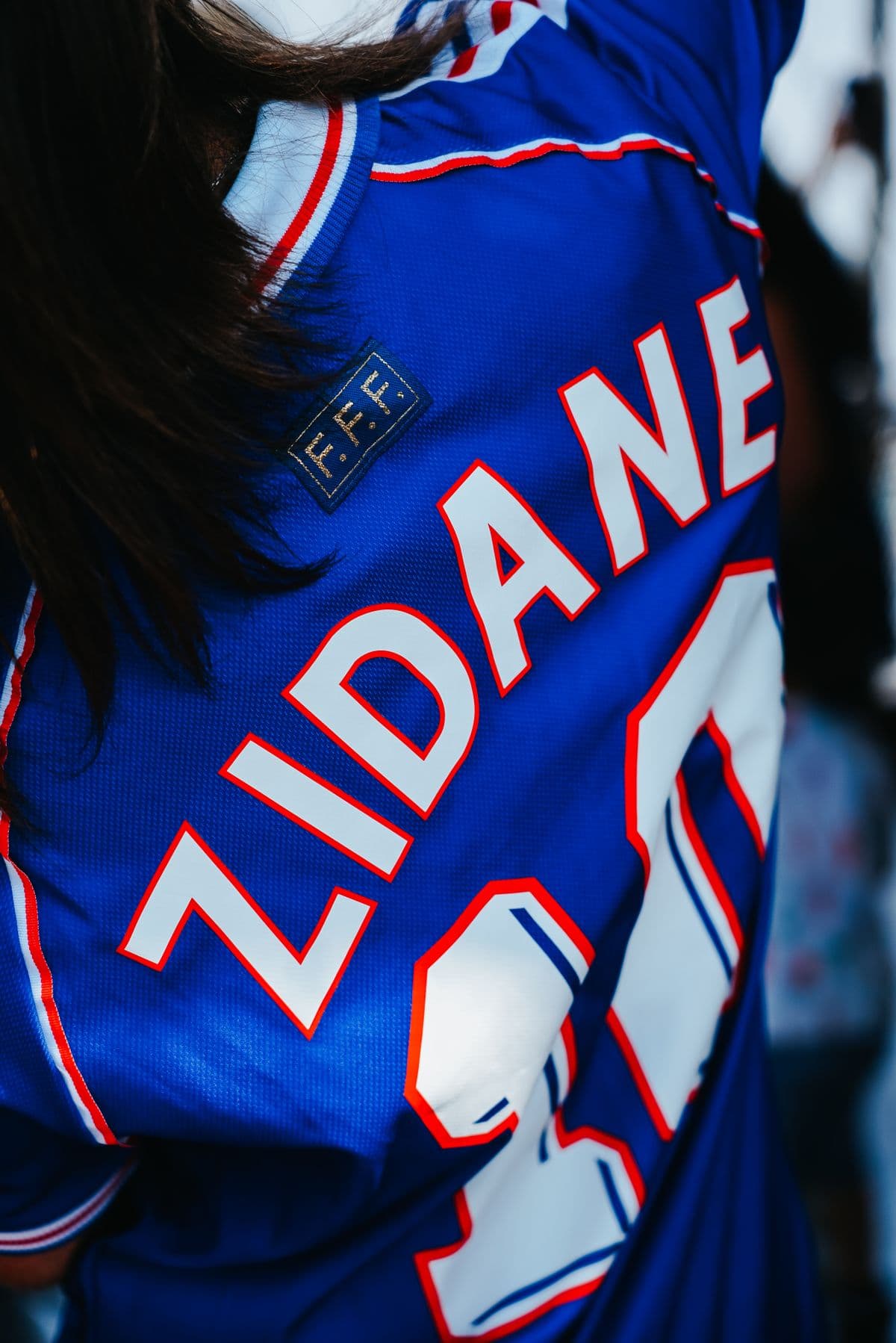
The details are applied late in the process. Crests are either embroidered — still common on replicas — or heat-applied as silicone or woven badges on authentic shirts, where embroidery would add weight. Sponsor logos are usually heat-pressed transfers. Names and numbers are added last of all, often at the retail stage, using heat-pressed lettering in the official competition typeface. It is the same method used when you personalise a Brazil jersey or a France shirt with your favourite player's name: a heated plate bonds the vinyl lettering to the fabric in seconds.
Testing Before a Shirt Reaches Match Day
Before a kit is signed off, it goes through wear trials with academy and first-team players, wash testing to check colourfastness, and stretch and abrasion tests. International shirts must also comply with FIFA's equipment regulations, which govern everything from sleeve badge placement to how much of a shirt a sponsor logo can occupy. Clubs playing in domestic leagues face similar rules — Premier League jerseys, for example, carry standardised sleeve patches and lettering that are part of the approval process, not an afterthought.
The Recycled Revolution
Since around 2010, the biggest change in how football shirts are made has been the shift to recycled polyester. Nike began producing World Cup kits from recycled plastic bottles — several bottles go into each shirt — and adidas has followed with its own recycled ranges. The performance is identical to virgin polyester, but the environmental footprint is smaller. Today the majority of shirts from major European national teams and top clubs in leagues like La Liga are made largely from recycled materials, and brands print the details inside the hem if you want to check.
What This Means When You Are Buying
Understanding how football shirts are made helps you judge value. A genuine shirt will have clean, even stitching, a properly bonded or embroidered crest, and print that feels part of the fabric rather than sitting on top of it. Poor seams, fuzzy crests and thick plasticky prints are the classic signs of a counterfeit. It also helps you look after your shirt properly: because prints are heat-bonded, you should wash cold, inside out, and never iron over crests or numbers. If you are unsure about sizing or authenticity when ordering, our FAQ page covers the most common questions, and you can read more about how we source our stock on our about us page.
From Factory to Shop Floor
Once production runs are complete, shirts are bagged, boxed and shipped to regional distribution centres, usually two to three months before the public launch. Timing is everything: brands coordinate global release dates so that a new kit drops everywhere at once, often alongside a reveal video featuring the squad. Retailers receive embargoed stock early, which is why your order can arrive the same week a kit launches. Limited runs — special anniversary designs, fourth kits and collaborations — are produced in far smaller quantities, and once they sell through they are rarely restocked, which is exactly how yesterday's shirts become tomorrow's collectables. Sizes are worth planning ahead for too, because popular sizes in big sellers like Portugal jerseys or Mexico shirts often sell out within weeks of a tournament being announced. If a shirt you want is showing low stock, that scarcity is baked into how the industry manufactures — not a sales trick.
Ready to See the Finished Product?
Every shirt in our store is the end result of this 18-month journey — from sketchbook to fabric mill to your front door. Browse our full range of World Cup 2026 jerseys to see the newest designs fresh off the production line, explore Germany jerseys and other favourites, or dig into our retro collection to compare how far shirt-making has come. Whichever era you choose, you will know exactly what went into making it.