Best Football Kits of the 1980s: The Decade Shirt Design Grew Up
From Maradona's Argentina to Denmark's Hummel pinstripes, a guide to the best football kits of the 1980s and the shirts that defined a decade.
August 28, 2026 · 5 min read · sidejersey
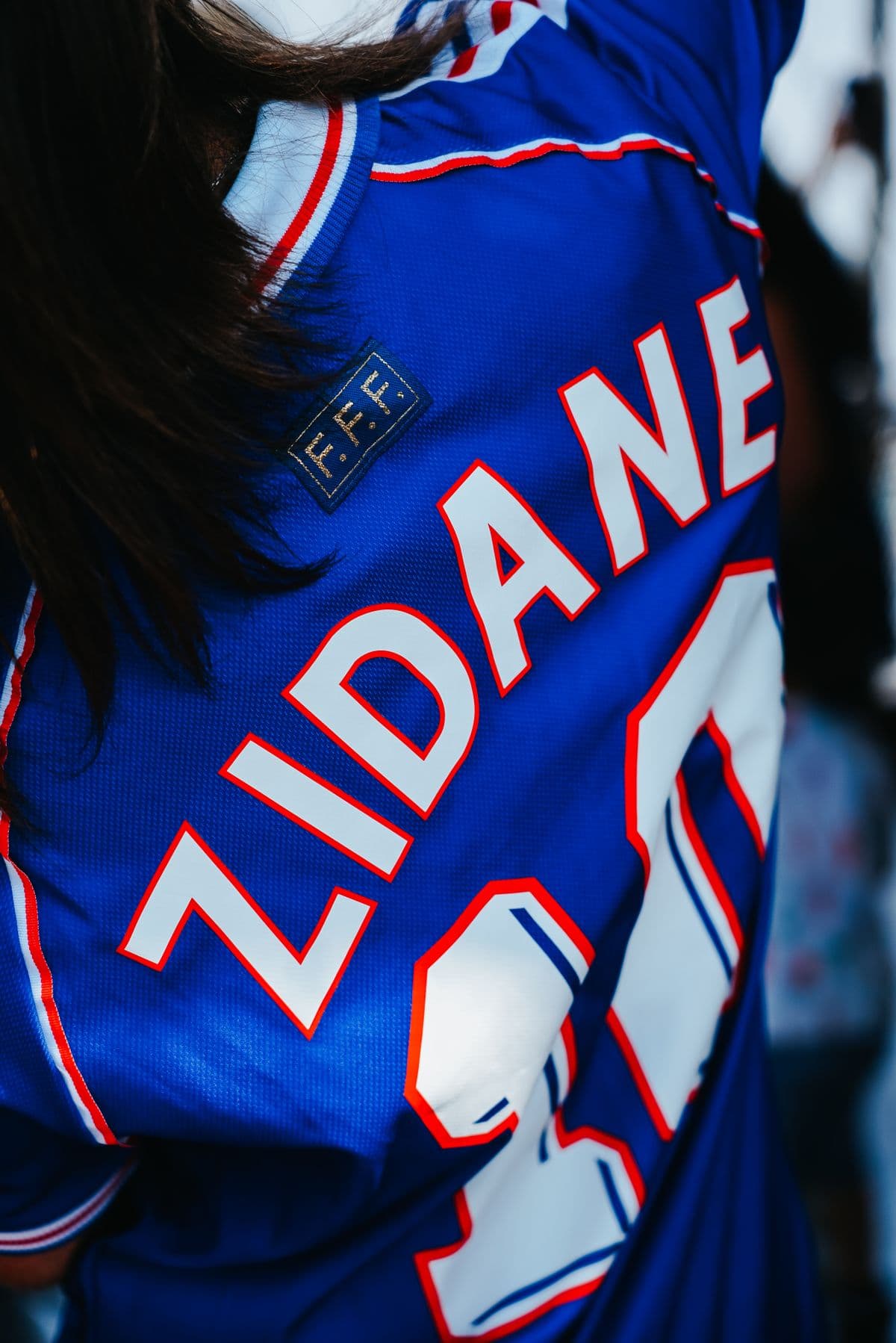
Ask any collector where modern shirt design really started and most will point straight at the best football kits of the 1980s. This was the decade football shirts stopped being plain work clothes and turned into the bold, patterned, sponsor-covered pieces we still chase today.
Why the 1980s Changed Football Shirt Design Forever
The 1970s gave us clean, heavy cotton shirts with simple collars. Then polyester arrived properly, screen printing got cheaper, and suddenly kit designers could do things that had been impossible a few years earlier: shadow stripes woven into the fabric, all-over geometric prints, pinstripes, chevrons and gradients.
Shirt sponsorship exploded at the same time. English clubs had only been allowed sponsors since 1977, and by the mid-80s a sponsor logo across the chest was standard everywhere. Because the BBC and ITV initially refused to broadcast sponsored shirts, several clubs ran sponsor-free versions for televised games, which is why so many 1980s classic football jerseys exist in two variants. That quirk alone keeps collectors busy.
Argentina 1986: The Shirt That Won a World Cup
No list of the best football kits of the 1980s starts anywhere else. Argentina's Le Coq Sportif home shirt in Mexico had thin sky-blue and white stripes, a simple crest and nothing else fighting for attention.
The away story is better. Argentina's official away shirt was too heavy for the Mexico City heat, so staff went shopping in the city and bought plain blue shirts, then had badges sewn on before the quarter-final against England. That improvised shirt is the one Maradona wore for the Hand of God and the Goal of the Century. You can browse the modern lineage of that design in our Argentina jersey collection, and read the full story in our guide to South American national team shirts.
Denmark 1986: Hummel's Half-and-Half Masterpiece
Danish Dynamite gave us arguably the most daring kit ever made. Hummel split the shirt into red and white halves, then filled each half with fine pinstripes running in opposite directions. It looked like a graphic design experiment that escaped the studio, and it worked.
Denmark backed it up with football to match, beating West Germany and Uruguay in the group stage. The shirt has been reissued repeatedly since, and it still sells. If you like European design of this era, our Europe collection is the place to start.
Netherlands 1988: Orange Geometry
Adidas gave the Dutch an orange shirt covered in a jagged geometric print that looked like nothing else on a pitch in 1988. Then Marco van Basten volleyed in that goal against the Soviet Union in the final and the Netherlands won their first major trophy wearing it.
It is the rare kit where the design and the moment are inseparable. Almost every Dutch shirt since has borrowed from it in some form.
West Germany 1988-90: The Chevron
Released for Euro 88 and worn all the way to the Italia 90 trophy lift, the adidas West Germany shirt put a black, red and gold chevron band across a white body. It is probably the most recognised national team shirt ever made, and the modern Germany jersey keeps circling back to it.
Adidas has reissued the chevron design more than once. Every time they do, it sells out.
Brazil 1982: The Best Team That Never Won
Topper made the yellow shirt worn by Zico, Socrates, Falcao and Eder in Spain 1982 - a side widely regarded as the greatest team never to win a World Cup. The design is deceptively plain: canary yellow, green trim, no sponsor, just the CBF crest.
That restraint is exactly why it aged so well. Our Brazil jersey range shows how little the core template has changed in forty years.
England 1982: Admiral's Shoulder Stripes
Admiral held the England contract until 1984, and their 1982 World Cup shirt is the one most fans picture from the era: white with red and blue shoulder banding, worn in Spain by Bryan Robson, Kevin Keegan and Trevor Francis. England went home unbeaten and still went out, which is very England.
Umbro took over in 1984 and moved things in a cleaner direction. Both eras get referenced in the current England jersey line.
The Club Kits That Defined the Decade
Napoli 1987-88
Ennerre made Maradona's Napoli shirts, and the sky-blue home with the Mars sponsor across the chest is one of the most bootlegged designs in football history. Napoli won their first Scudetto in it. Serie A obsessives should look through our Italy collection.
Liverpool 1985-87
Adidas, Crown Paints, three stripes down the sleeve. Simple, red, and worn during one of the club's most dominant spells. It remains a benchmark for how little a great kit actually needs.
Real Madrid and the Hummel Years
Hummel took over Real Madrid in 1986, right as the Quinta del Buitre generation hit their peak. The chevron trim on white is a look Madrid fans still ask for. Compare it with the modern range in our La Liga jerseys section.
Manchester United 1988-90
Adidas and the Sharp sponsor, worn as Alex Ferguson was building his first great side. It is a cornerstone shirt for anyone collecting from the Premier League era clubs, even though the league itself did not exist yet.
What Actually Made 1980s Kits Different
Three things, mostly. First, the fit: 1980s shirts were cut generously, often with baggy sleeves and a boxy body. Second, the fabric: lightweight polyester replaced cotton almost entirely, which allowed woven shadow patterns. Third, the collar: v-necks, wing collars and buttoned polo collars all had their moment, sometimes in the same season.
The trade-off was durability. Many 1980s shirts have thin, cracked screen-printed numbers today because the print technology was newer than the fabric it sat on. If you own one, our FAQ covers washing and storage properly - cold wash, inside out, never tumble dry.
How to Wear 1980s Kits Today
The good news is that the boxy 80s cut is back in fashion, so an oversized retro shirt looks intentional rather than dated. Wear it loose with straight-leg jeans or shorts and clean trainers, and skip the full kit unless you are actually playing.
Reissues are the sensible entry point. Original 1980s match-worn or even shop-bought shirts now sell for serious money, and the counterfeit market for them is enormous. Modern reissues give you the design without the risk, and they survive a wash.
Build Your Own 80s-Inspired Collection
The best football kits of the 1980s are still shaping what lands in shops today - every geometric print, chevron and pinstripe on a 2026 shirt owes something to this decade. If you want to see how far the line runs, start with our World Cup 2026 jerseys hub, then work backwards through national team jerseys and club jerseys.
France fans should check the France jersey range for the Platini-era influence, and there is plenty more in Portugal and Mexico for anyone building around the 1986 tournament. For the official record of that World Cup, FIFA's Mexico 1986 archive is worth a read.
Not sure where to start? Have a look at who we are and get in touch - we are happy to help you track down the shirt you actually want.