The Best African National Team Jerseys of All Time
From Nigeria 2018 to Cameroon's banned vest, these are the best African national team jerseys ever made — and how to buy them.
August 16, 2026 · 6 min read · sidejersey
African national team jerseys have given football some of its boldest colours, bravest design decisions and most collectable shirts, and yet they still sit in the shadow of the usual European and South American classics. This is our run-down of the best African national team jerseys of all time, why they matter, and what to look for if you want one hanging in your wardrobe rather than just saved in a screenshot folder.
What makes the best African national team jerseys stand out
Three things, mostly. First, colour. While plenty of European national teams stick to a rigid palette handed down from the 1950s, African federations have been far happier to use full-strength green, orange, gold and red, often all at once. Second, pattern. Kit manufacturers have consistently used African tournaments and World Cup campaigns as a licence to experiment with graphics they would never dare put on a Germany shirt. Third, story. Almost every shirt on this list is attached to a genuinely famous 90 minutes.
Nigeria 2018 — the shirt that broke the internet
You cannot write about African national team jerseys without starting here. Nike's 2018 Super Eagles home shirt paired a black-and-white zigzag sleeve with a green-and-white chevron body, and it did numbers no international kit had done before: reportedly around three million pre-orders, queues around the block at Nike's London store, and a sell-out within minutes of release. It worked because it was unapologetically loud and because it referenced Nigeria's 1994 side, the team of Jay-Jay Okocha and Rashidi Yekini that went to the World Cup and immediately looked like it belonged.
It also changed the commercial maths. Before 2018, big brands treated African kits as low-volume. After 2018, everybody wanted the "Nigeria effect", which is why the last few cycles of national team jerseys have been so much more adventurous across the board.
Cameroon 2002 — the kit FIFA had to ban
Puma's sleeveless Indomitable Lions shirt from the 2002 Africa Cup of Nations is one of the great acts of football design mischief. Cameroon won the tournament in it, then turned up at the 2002 World Cup and were told the vest was not a shirt. Puma's fix was to sew black sleeves underneath, which somehow looked even better. Two years later they went further with a one-piece kit at AFCON 2004 and were fined and briefly docked qualifying points for it. Very few kits can claim to have altered the laws of the game. This one did it twice.
Zaire 1974 — the original
Zaire were the first sub-Saharan African side at a World Cup, and their green shirt with the leopard badge is now one of the most sought-after items in classic jerseys collecting. The tournament itself went badly, but the shirt has aged into something genuinely iconic, partly because so few originals survive and partly because that leopard crest is one of the best badges anyone has ever put on a football shirt.
Senegal 2002 — white, green trim, and a giant-killing
Le Coq Sportif's Lions of Teranga shirt is simple: clean white, green detailing, the lion crest. What makes it a great is 31 May 2002, when a Senegal side on debut beat holders France in the opening match of the World Cup and Papa Bouba Diop celebrated by dancing around his shirt on the corner flag. If you own a France jersey you probably have a slightly different memory of that afternoon.
Morocco 2022 — red, green, and a semi-final
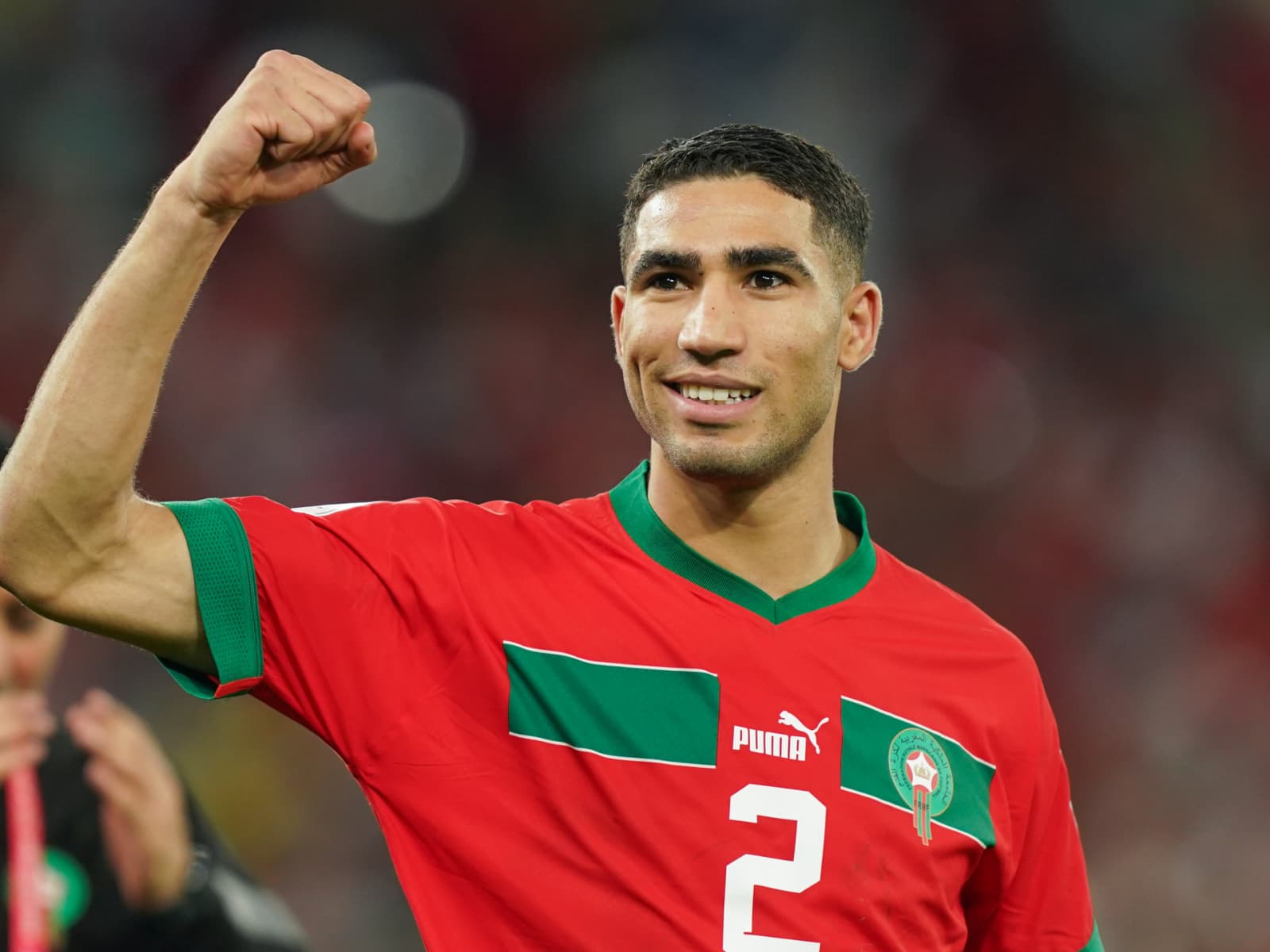
Puma's Atlas Lions home shirt from Qatar 2022 is deceptively plain — deep red, green crest, subtle tonal detailing — but it is now permanently attached to the first African side to reach a World Cup semi-final. Morocco beat Belgium, Spain and Portugal in that run, which means this one shirt has a better recent World Cup record than a lot of the shirts in our Spain, Portugal and Belgium ranges. Demand for it went vertical during the tournament and has never really come back down.
Ghana — black star, gold, and 2010
Ghana's kits work because the badge does most of the heavy lifting. The black star is a proper national symbol rather than a football logo, and the red-gold-green Pan-African palette gives designers a lot to play with. The 2010 shirt is the definitive one: Ghana became the last African team standing at that World Cup and were a Luis Suárez handball and a missed penalty away from the semi-finals. Sixteen years on it still stings, which is exactly why the shirt sells.
Ivory Coast — orange as a brand
Nobody else owns orange in international football except the Netherlands, and the Elephants wear a warmer, deeper version of it. The 2006 shirt, worn at Ivory Coast's first World Cup by a squad containing Didier Drogba, Kolo and Yaya Touré, is the collector's pick. It is also a reminder that plain kits age far better than fussy ones — there is no gimmick here, just a strong colour and a good badge.
Algeria 1982 and Egypt's long history
Algeria's simple green-and-white shirt from 1982 belongs on any serious list, purely because of what happened in it: a 2-1 win over reigning European champions West Germany in Gijón, one of the biggest World Cup upsets ever recorded. Egypt, meanwhile, have the longest pedigree of any African football nation — they were at the 1934 World Cup — and the modern red home shirt has had a second life thanks to Mohamed Salah, whose Premier League profile pulled a whole new audience towards the Pharaohs.
South Africa 1996 — Bafana Bafana in yellow
Kappa's yellow-and-green shirt from the 1996 Africa Cup of Nations, won on home soil two years after the first democratic elections, carries more meaning than most football kits will ever manage. It is also just a lovely piece of mid-90s design: boxy cut, big collar, no attempt whatsoever at subtlety.
Buying African national team jerseys: what to check
A few practical notes, because these shirts are among the most heavily counterfeited in football.
Fit and sizing
Authentic (player-issue) versions are cut noticeably slimmer than replicas and use lighter, more perforated fabric. If you are between sizes and want to wear it casually, size up or buy the replica. The same logic applies whether you are buying a Nigeria shirt or a Brazil jersey.
Badge and heat-transfer quality
On genuine shirts, crests and manufacturer logos are cleanly bonded with no bubbling at the edges, stitching is even, and the wash label carries a legible product code. Fakes usually fall down on the crest first — colours are slightly off and the edges lift after a couple of washes.
Retro versus current
Original 1970s–1990s shirts are scarce and priced accordingly. Officially licensed reissues are a far more sensible entry point, and our retro and classic range is the place to start if you want the look without the auction-house pricing. You can read more about how the site sources shirts on our about us page.
Where African kits sit in the wider international picture
If you collect internationals, African shirts are still relatively undervalued compared with Argentina and other South American classics, or the perennial sellers from England and Italy. That gap is closing fast. Expanded World Cup fields mean more African nations on the biggest stage, more North and Central American host-nation exposure, and more first-time buyers discovering these designs. For the full picture of what has been released and what is still coming, our World Cup 2026 jerseys hub is kept up to date, and the official FIFA site is the best source for fixture and tournament confirmations.
Ready to pick one up?
The best African national team jerseys are loud, meaningful and — for now — still a bargain next to the equivalent European classics. Browse the full national teams collection to find your shirt, have a look at the club teams range if you want to match a domestic shirt to an international one, and check the FAQ for sizing, customisation and delivery details before you order. If you are torn between two, buy the one attached to the match you actually remember watching — that is the one you will still be wearing in ten years.